
Shakespeare’s Financial Success
Shakespeare the Successful Artist
Para1
Unlike many artists, Shakespeare enjoyed prosperity during his own lifetime. It is
impossible to calculate his actual income with any certainty, although as playwright,
sharer in the Lord Chamberlain’s Men and later the King’s Men, and eventually a sharer
(partner) in the Globe and Blackfriars theaters, he probably made at least £200 annually.
This means that starting in about 1597, Shakespeare was earning at least $70,000 U.S.in
2023 terms. Later, he may have owned more than one share, thus increasing his income.
His earnings meant he was able to support his family in Stratford-upon-Avon, live
in London while he chose, and purchase numerous other properties.
A Man of Property
Para2Shakespeare invested his money effectively, purchasing several properties in and around
Stratford, including a major investment in farm revenues. In 1597, he purchased New
Place, the second largest home in Stratford. In 1602, Shakespeare purchased 107 acres
of land near Stratford-upon-Avon for the large sum of £320. In 1605, he invested £440
to lease a portion of the income from the products of lands own by the Stratford Corporation;
the income came from the tithes in corn, grain, hay, wool, and livestock. One record
featured on Shakespeare Documented shows “William Shakespere Lykewise holdeth one cottage and one garden by estimation
a quarter of one acre and payeth rent yearly”. He also owned a London rental property,
which passed to his heirs upon his death, even though it had three other men (William
Johnson, John Jackson, and John Heminges) as trustees on the deed.
Minor Financial Troubles
Para3 Surviving financial records concerning Shakespeare are not all demonstrations of
his prosperity or good management. He avoided (or forgot to pay) taxes on more than
one occasion. For example, in the year after he purchased New Place, the expense of
that large real estate purchase may have created a cash-flow problem for Shakespeare,
since his name appears later in the same year as a defaulter on the payment of taxes
on November 15, 1597—he owed the sum of five shillings (a quarter of a pound).
Para4On other occasions, Shakespeare used the courts to his own advantage, bringing a suit
against Philip Rogers for outstanding debt 39 shillings, 10 pence, the price of 20
bushels of malt used for making beer. That sum is equivalent to about £275 today.
According to the National Archives in Britain, in Shakespeare’s time, it was about
the price of a cow or 39 days of skilled labor by a tradesman.
Para5But whatever minor troubles he might have had, he gained a reputation for having money,
since one of his neighbors and Stratford alderman Richard Quiney (whose son Thomas
was later to marry Shakespeare’s younger daughter Judith) wrote a letter asking for
a loan of £30, but he likely never sent it. It survived in the records of the city
of Stratford, and it is the only surviving letter written to Shakespeare.
Sources
McDonald, Russ.
Getting and Spending.The Bedford Companion to Shakespeare Second Edition, Bedford/St. Martin’s, 2001, pp.233-237.
Potter,Lois. The Life of William Shakespeare: A Critical Biography. Wiley-Blackwell, 2012.
Open-Access Digital Resources
Bearman, Robert et al.
The Only Surviving Letter to Shakespeare: Letter From Richard Quiney Asking for Shakespeare’s Assistance in Securing a Loan of £30.Shakespeare Documented, doi: doi.org/10.37078/123. Accessed 11 Feb. 2026.
Bearman, Robert et al.
Declaration in the Stratford-Upon-Avon Court of Record, in a Suit Between William Shakespeare and Philip Rogers, Concerning Money Owed by Rogers for the Sale of Malt to Him by Shakespeare in 1604.Shakespeare Documented, doi: doi.org/10.37078/521. Accessed 11 Feb. 2026.
Best, Michael.
Shakespeare’s Income.Shakespeare’s Life and Times. Internet Shakespeare Editions. University of Victoria, 04 Jan. 2011, https://internetshakespeare.uvic.ca/Library/SLT/life/last%20plays/income.html.. Accessed 11 Feb. 2026.
Best, Michael.
A Major Purchase in Stratford, 1597.Shakespeare’s Life and Times. Internet Shakespeare Editions. University of Victoria, 04 Jan. 2011, https://internetshakespeare.uvic.ca/Library/SLT/life/early%20maturity/newplace.html. Accessed 11 Feb. 2026.
Currency Converter, 1270–2017..The National Archives, https://www.nationalarchives.gov.uk/currency-converter/. Accessed 11 Feb. 2026.
Image Sources
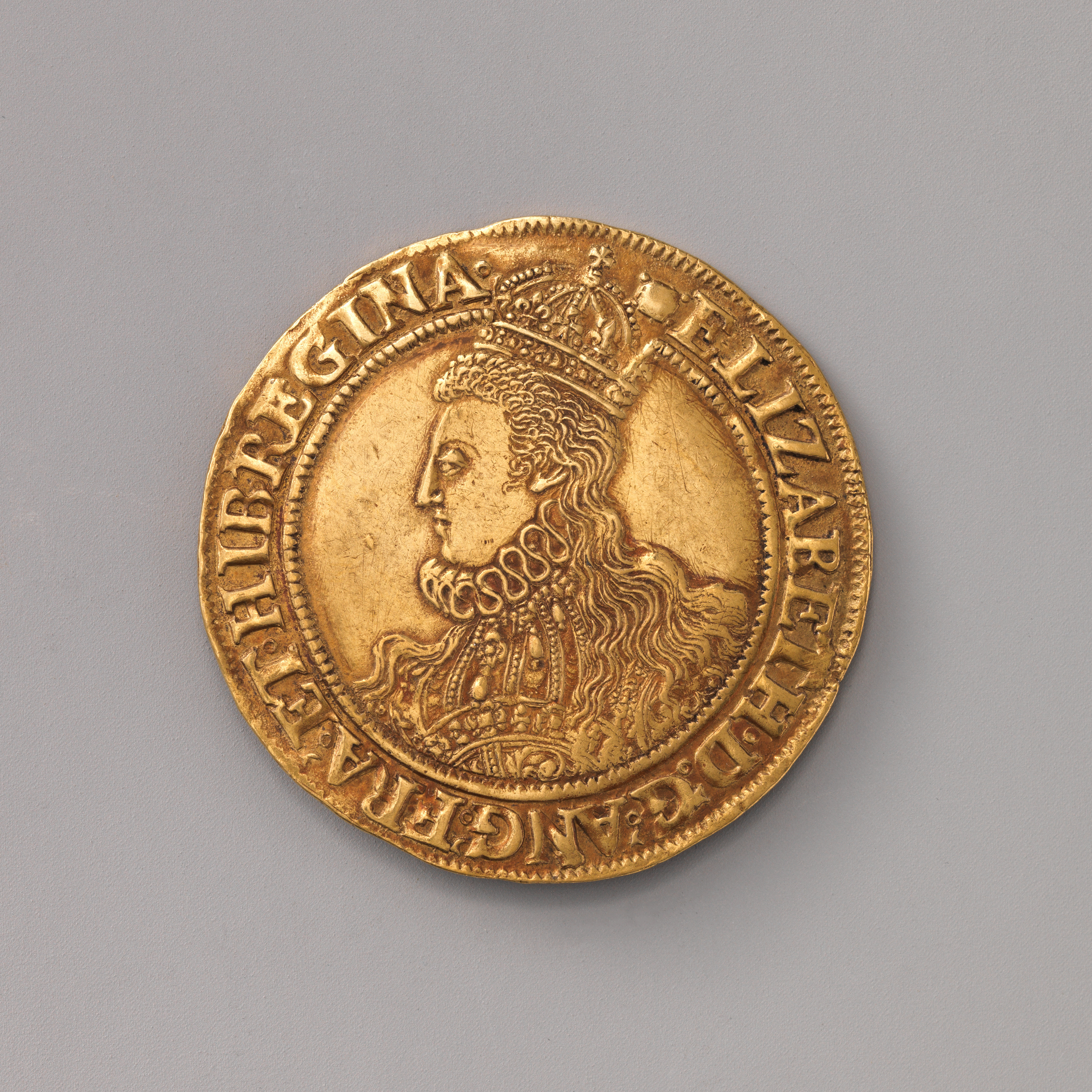
Elizabeth I (r. 1558–1603). 1594–1596. The Metropolitan Museum of Art. https://www.metmuseum.org/art/collection/search/188483.
Prosopography
Kate McPherson
Kate McPherson is Professor of English and Honors Program Director at Utah Valley
University (Orem, UT, USA). In 2015, she began working to redevelop Shakespeare’s Life and Times, created by Michael Best, into the Early Modern England Encyclopedia. Her other publications include commentary on Pericles and The Comedy of Errors for the New Oxford Shakespeare (2016); the co-edited volumes Stages of Engagement: Drama and Religion in Post-Reformation England with James Mardock (Duquesne University Press, 2014) and Shakespeare Expressed: Page, Stage, and Classroom in Shakespeare and His Contemporaries, with Kathryn M. Moncrief and Sarah Enloe (Fairleigh Dickinson University Press,
2013). With Kathryn M. Moncrief, Kate has also two edited collections, Performing Pedagogy in Early Modern England: Gender, Instruction, and Performance (Ashgate, 2011) and Performing Maternity in Early Modern England (Ashgate 2008). She has also published numerous articles on early modern maternity
in scholarly journals. Kate participated in the 2008 National Endowment for the Humanities
Institute,
Shakespeare’s Blackfriars: The Study, the Stage, the Classroom,at the American Shakespeare Center. She also served as Play Seminar Director, a public humanities position, for the Utah Shakespeare Festival in 2017 and 2018.
Leah Hamby
Leah Hamby is the primary encoder for the Early Modern England Encyclopedia. Aside from encoding, she also works as an editor for the project and contributed
several articles of her own. She has been working on the EMEE since February 2023. As of February 2026, she is soon to graduate with honours from
Utah Valley University with a major in history and a minor in creative writing. Her
other work with the LEMDO program includes remediating William Kemp’s Kemp’s Nine Day’s Wonder for the Digital Renaissance Editions.
Michael Best
Michael Best is Professor Emeritus at the University of Victoria, BC. He founded the
Internet Shakespeare Editions in 1996, and was Coordinating Editor until 2017, contributing two editions to the
ISE: King John and King Lear (the latter also available in print from Broadview Press). In print, he has published editions of works of Elizabethan magic and huswifery,
a collection of letters from the Australian goldfields, and Shakespeare on the Art of Love (2008). He contributed regular columns for the Shakespeare Newsletter on
Electronic Shakespeares,and has written many articles and chapters for both print and online books and journals, principally on questions raised by the new medium in the editing and publication of texts. He has delivered papers and plenary lectures on electronic media and the Internet Shakespeare Editions at conferences in Canada, the USA, the UK, Spain, Australia, and Japan.
Navarra Houldin
Training and Documentation Lead 2025–present. LEMDO project manager 2022–2025. Textual
remediator 2021–present. Navarra Houldin (they/them) completed their BA with a major
in history and minor in Spanish at the University of Victoria in 2022. Their primary
research was on gender and sexuality in early modern Europe and Latin America. They
are continuing their education through an MA program in Gender and Social Justice
Studies at the University of Alberta where they will specialize in Digital Humanities.
Orgography
LEMDO Team (LEMD1)
The LEMDO Team is based at the University of Victoria and normally comprises the project
director, the lead developer, project manager, junior developers(s), remediators,
encoders, and remediating editors.
University of Victoria (UVIC1)
https://www.uvic.ca/Metadata
| Authority title | Shakespeare’s Financial Success |
| Type of text | Critical |
| Publisher | University of Victoria on the Linked Early Modern Drama Online Platform |
| Series | Early Modern England Encyclopedia |
| Source |
By Kate McPherson, inspired by Michael Best’s Shakespeare’s Life and Times, Internet Shakespeare Editions
|
| Editorial declaration | This document uses Canadian English spelling |
| Edition | Released with Early Modern England Encyclopedia 1.0 |
| Sponsor(s) |
Early Modern England EncyclopediaAnthology Leads: Kate McPherson and Kate Moncrief.
|
| Encoding description | Encoded in TEI P5 according to the LEMDO Customization and Encoding Guidelines |
| Document status | published |
| Funder(s) |
Social Sciences and Humanities Research Council of Canada
Mitacs Globalink Research Internship Utah Valley University |
| License/availability |
Unless otherwise noted, intellectual copyright in EMEE Anthology pages is held by
Kate McPherson on behalf of the contributors. Copyright on the TEI-XML markup is held by the University of Victoria on behalf of the LEMDO Team. The content and TEI-XML markup in this file are licensed under a CC BY-NC-ND 4.0 license. This file is freely downloadable without permission under the following conditions:
(1) credit must be given to the authors, EMEE, and LEMDO in any subsequent use of
the files and /or data; (2) this availability statement must remain in the file; (3)
the content cannot be adapted or repurposed (except for quotations for the purposes
of academic review and citation); and (4) commercial uses are not permitted without
the knowledge and consent of the authors, EMEE, and LEMDO. Neither the content nor
the code in this file is licensed for training large language models (LLMs), ingestion
into an LLM, or any use in any artificial intelligence applications; such uses are
considered to be commercial uses and are strictly prohibited.
|