
Famine and Inflation in Early Modern England
A Changed Climate
Para1Early modern England’s climate was inconsistent, possibly due to changes in atmospheric
circulation, solar activity, or volcanic activity elsewhere on the planet. The changes
English people experienced in common weather patterns resulted in repeated poor harvests
after 1550, causing this era to also be referred to as the Little Ice Age. This series of climactic impacts on crops and livestock drove up prices, making
food unaffordable for most labourers. During the 16th century, the price of grain
(and thus bread) rose as much as sixfold. Many common people struggled with hunger
and malnutrition, eventually leading to social unrest.
Famine
Para2The severity of famine in England was dire on several occasions in the 16th and 17th
centuries. The nation experienced more than 40 riots over food and food prices in
the period between 1586 and 1631. In the famine of 1623, the people became desperate,
as shown in a report from a Lincolnshire landlord who wrote that his neighbor stole
a sheep and
tore a leg out, and did eat it rawand that
Dog’s flesh was a dainty dish and found upon search in many houses.
Enclosure
Para3Another factor that amplified famine’s toll was a new feature of the English agricultural
landscape called enclosure, which was “the conversion of peasants’ common grazing or other arable lands into
privately owned pastures for livestock production.” With the majority of the common
land lost and replaced with enclosures, many landless laborers and smaller farmers,
called smallholders, lost their jobs. This can be seen in Book 1 of Sir Thomas More’s
Utopia, where he describes landowners who have enclosed
every acre for pastureand left
no land free for the plow.
Inflation and Profiteering
Para4Some profit-driven farmers and merchants attempted to make quick money off the catastrophe
by hoarding grain and withholding it from the open market, thus raising the food prices
even higher. Grain was considered important for the well-being of English people—the
poor often lived on bread, porridge, and a vegetable and grain stew called pottage—so
policies were put into place by the government to both prohibit the export of grain
and enforce of laws against hoarding grain.
Para5Shakespeare, who was a landowner and commodity trader in his hometown of Stratford-upon-Avon,
in addition to being a successful playwright in London, opportunistically benefited
from the famine and inflation. Some of his acts of exploitation, for which he was
sometimes fined by the courts, include:
Purchasing food-producing land and storing grain, malt, and barley to resell to his
neighbors and other tradesmen over a 15-year period.
Holding 80 bushels 480 lbs of malt or corn during a time of shortage(Archer et al. 10).
Pursuing debt repayment for food supplies and using the money gained to further his
moneylending activities.
How Famine Influenced Literature
Para6Printers and publishers found opportunity by printing many famine pamphlets, which
contained detailed or graphic descriptions of the public’s desperation. For example,
the Geneva preacher Lodowick Laveter’s Three Christian Sermons...of Famine and Dearth of Victuals...Being Verie Fit for this
Time of our Dearth were translated and published in English in 1596.
Para7Although Shakespeare benefited from the inflation caused by the famine, he still wrote
about hunger and social inequality. As You Like It showcases the disparity in social status and wage inequality. Lauren Shook suggests
that Shakespeare used characters such as the story’s lovers, Rosalind and Orlando,
to represent the privileged aristocratic population who benefit from lower-class laborers—such
as Adam and Corin—while offering little to no compensation in return.
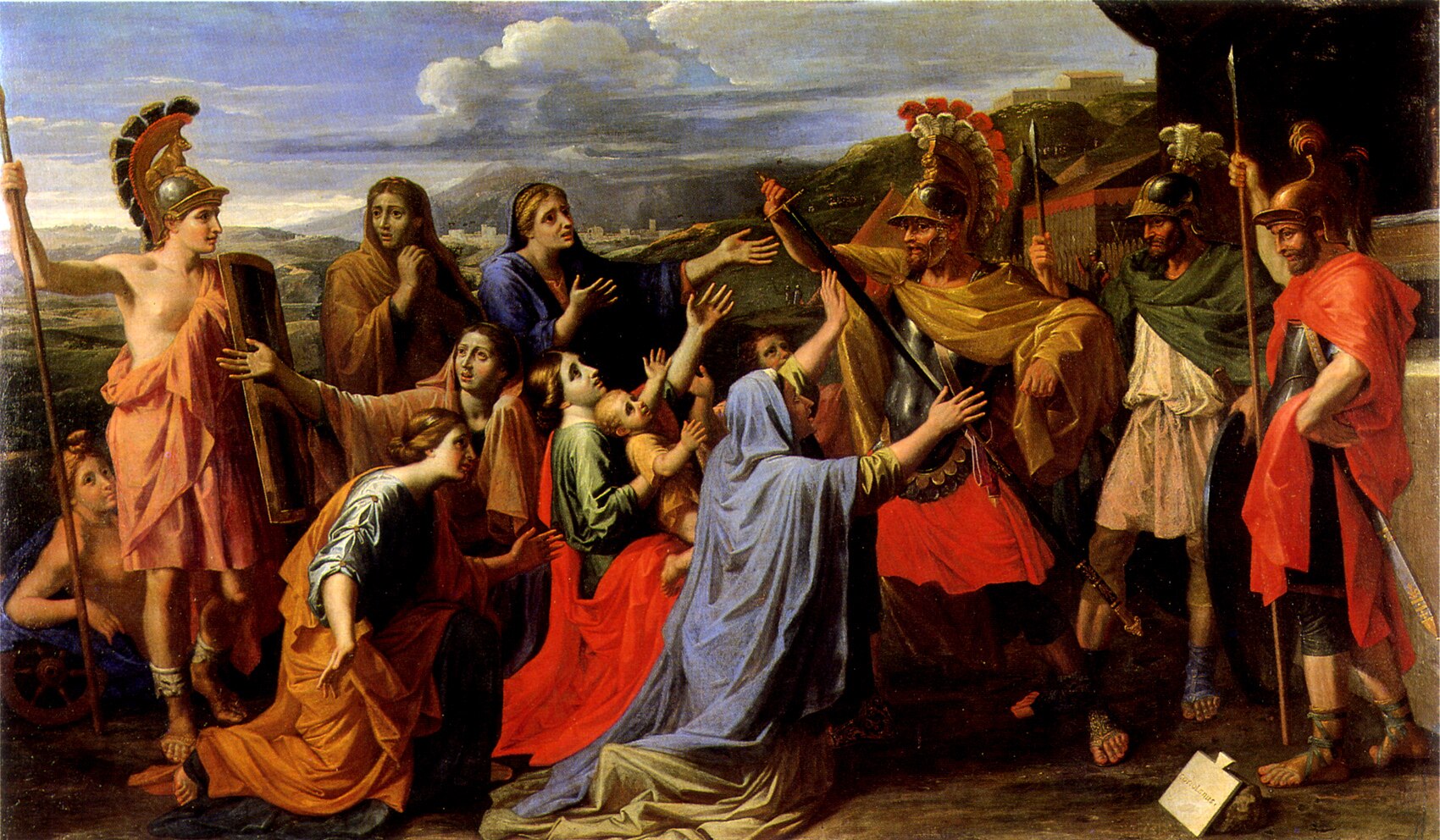
Para8Shakespeare also threads the themes of famine and social stratification in Coriolanus. The play begins in Rome where the people are starving, when attempt to revolt against
the nobles for hoarding food. The suffering and anger in the play’s opening act reflects
the grim reality and feelings many likely felt during the famine in Shakespeare’s
era:
We are accounted poor citizens, the patricians good. What authority surfeits on would relieve us. If they would yield us but the superfluity while it were wholesome, we might guess they relieved us humanely. But they think we are too dear. The leanness that afflicts us, the object of our misery, is as an inventory to particularize their abundance; our sufferance is a gain to them. Let us revenge this with our pikes ere we become rakes; for the gods know I speak this in hunger for bread, not in thirst for revenge.(1.1.12–19)
Sources
Archer, Jayne Elisabeth et al..
Reading Shakespeare with the Grain: Sustainability and the Hunger Business.Green Letters: Studies in Ecocriticism, vol. 9, no. 1, 2015, pp. 9–17.
Healey, Jonathan. Land, Population and Famine in the English Uplands: A Westmorland Case Study, c.1370–1650.
The Agricultural History Review, vol. 59, no. 2, 2011, pp. 151–75.
Lavater, Lewis. Three Christian Sermons...of Famine and Dearth of Victuals...Being Verie Fit for this
Time of our Dearth. Translated by William Barlow. London: Thomas Creede, 1596.
Shakespeare, William. Coriolanus. The New Oxford Shakespeare. Edited by Gary Taylor et al. Oxford UP, 2016.
Sharp, Buchanan. Famine and Scarcity in Late Medieval and Early Modern England: The Regulation of Grain
Marketing, 1256–1631. Cambridge UP, 2016.
Open-Access Digital Resources
Best, Michael.
Seasons Awry: Famine.Shakespeare’s Life and Times. Internet Shakespeare Editions. University of Victoria, 4 Jan. 2011, https://internetshakespeare.uvic.ca/Library/SLT/society/husbandry/famine.html. Accessed 30 Oct. 2023.
Bramley, Anne. In Shakespeare’s Day, Hunger Tore Through England. His Plays Tell The Tale. National Public Radio, 23 Apr. 2016, https://www.npr.org/sections/thesalt/2016/04/23/475291416/in-shakespeares-day-hunger-tore-through-england-his-plays-tell-the-tale. Accessed 11 Feb. 2026.
Britannica Editors.
Enclosure.Encyclopedia Britannica, 25 Feb. 2013, https://www.britannica.com/topic/enclosure. Accessed 11 Feb. 2026.
Effects of the Little Ice Age c.1300–1850.Smith College, https://www.science.smith.edu/climatelit/the-effects-of-the-little-ice-age/. Accessed 14 Nov. 2025.
Lee, Alexander.
Shakespeare the Hoarder.History Today, 3 Apr. 2013, https://www.historytoday.com/shakespeare-hoarder. Accessed 11 Feb. 2026.
Shook, Lauren.
The Sundial (ACMRS), 19 April 2022, https://medium.com/the-sundial-acmrs/i-earn-that-i-eat-hungry-food-workers-in-as-you-like-it-dc0b739bacd6. Accessed 11 Feb. 2026.I earn that I eat: Hungry Food Workers in As You Like It.
Image Sources
Poussin, Nicolas. Coriolan Supplié par sa Famille. 1652–1653. Oil on canvas. Wikimedia Commons. https://commons.wikimedia.org/wiki/File:Poussin_Coriolan_Les_Andelys.jpg.

Prosopography
Jennifer Tookey
Jennifer Tookey was a student at the University of Fraser Valley.
Kate McPherson
Kate McPherson is Professor of English and Honors Program Director at Utah Valley
University (Orem, UT, USA). In 2015, she began working to redevelop Shakespeare’s Life and Times, created by Michael Best, into the Early Modern England Encyclopedia. Her other publications include commentary on Pericles and The Comedy of Errors for the New Oxford Shakespeare (2016); the co-edited volumes Stages of Engagement: Drama and Religion in Post-Reformation England with James Mardock (Duquesne University Press, 2014) and Shakespeare Expressed: Page, Stage, and Classroom in Shakespeare and His Contemporaries, with Kathryn M. Moncrief and Sarah Enloe (Fairleigh Dickinson University Press,
2013). With Kathryn M. Moncrief, Kate has also two edited collections, Performing Pedagogy in Early Modern England: Gender, Instruction, and Performance (Ashgate, 2011) and Performing Maternity in Early Modern England (Ashgate 2008). She has also published numerous articles on early modern maternity
in scholarly journals. Kate participated in the 2008 National Endowment for the Humanities
Institute,
Shakespeare’s Blackfriars: The Study, the Stage, the Classroom,at the American Shakespeare Center. She also served as Play Seminar Director, a public humanities position, for the Utah Shakespeare Festival in 2017 and 2018.
Leah Hamby
Leah Hamby is the primary encoder for the Early Modern England Encyclopedia. Aside from encoding, she also works as an editor for the project and contributed
several articles of her own. She has been working on the EMEE since February 2023. As of February 2026, she is soon to graduate with honours from
Utah Valley University with a major in history and a minor in creative writing. Her
other work with the LEMDO program includes remediating William Kemp’s Kemp’s Nine Day’s Wonder for the Digital Renaissance Editions.
Melissa Walter
Melissa Walter is Associate Professor of English at the University of the Fraser Valley.
Her research focuses on early modern English drama and English and European prose
fiction. She is the author of The Italian Novella and Shakespeare’s Comic Heroines (U of Toronto, 2019), and co-editor, with Dennis Britton, of Rethinking Shakespeare Source Study: Authors, Audiences, Digital Technologies (Routledge, 2018). Her work on English theatre and the European novella has appeared
in several edited collections, including Transnational Exchange in Early Modern Theater (Ashgate, 2008), and Transnational Mobility in Early Modern Theater (Ashgate, 2012). She has also written about
Translation and Identity in the Dialogues in English and Malaiane Languages(Indographies, ed. Jonathan Gil Harris. Palgrave 2012). At the University of the Fraser Valley, she is a lead coordinator of UFV’s Shakespeare and Reconciliation Garden.
Michael Best
Michael Best is Professor Emeritus at the University of Victoria, BC. He founded the
Internet Shakespeare Editions in 1996, and was Coordinating Editor until 2017, contributing two editions to the
ISE: King John and King Lear (the latter also available in print from Broadview Press). In print, he has published editions of works of Elizabethan magic and huswifery,
a collection of letters from the Australian goldfields, and Shakespeare on the Art of Love (2008). He contributed regular columns for the Shakespeare Newsletter on
Electronic Shakespeares,and has written many articles and chapters for both print and online books and journals, principally on questions raised by the new medium in the editing and publication of texts. He has delivered papers and plenary lectures on electronic media and the Internet Shakespeare Editions at conferences in Canada, the USA, the UK, Spain, Australia, and Japan.
Navarra Houldin
Training and Documentation Lead 2025–present. LEMDO project manager 2022–2025. Textual
remediator 2021–present. Navarra Houldin (they/them) completed their BA with a major
in history and minor in Spanish at the University of Victoria in 2022. Their primary
research was on gender and sexuality in early modern Europe and Latin America. They
are continuing their education through an MA program in Gender and Social Justice
Studies at the University of Alberta where they will specialize in Digital Humanities.
Orgography
LEMDO Team (LEMD1)
The LEMDO Team is based at the University of Victoria and normally comprises the project
director, the lead developer, project manager, junior developers(s), remediators,
encoders, and remediating editors.
University of Victoria (UVIC1)
https://www.uvic.ca/Metadata
| Authority title | Famine and Inflation in Early Modern England |
| Type of text | Critical |
| Publisher | University of Victoria on the Linked Early Modern Drama Online Platform |
| Series | Early Modern England Encyclopedia |
| Source |
By Jennifer Tookey, inspired by Michael Best’s Shakespeare’s Life and Times, Internet Shakespeare Editions
|
| Editorial declaration | This document uses Canadian English spelling |
| Edition | Released with Early Modern England Encyclopedia 1.0 |
| Sponsor(s) |
Early Modern England EncyclopediaAnthology Leads: Kate McPherson and Kate Moncrief.
|
| Encoding description | Encoded in TEI P5 according to the LEMDO Customization and Encoding Guidelines |
| Document status | published, peer-reviewed |
| Funder(s) |
Social Sciences and Humanities Research Council of Canada
Mitacs Globalink Research Internship Utah Valley University |
| License/availability |
Intellectual copyright in this entry is held by Kate McPherson on behalf of the contributors. Copyright on the TEI-XML markup is held by the University of Victoria on behalf of the LEMDO Team. The content and TEI-XML markup in this file are licensed under a CC BY-NC_ND 4.0 license. This file is freely downloadable without permission under the following conditions:
(1) credit must be given to the authors, EMEE, and LEMDO in any subsequent use of
the files and /or data; (2) this availability statement must remain in the file; (3)
the content cannot be adapted or repurposed (except for quotations for the purposes
of academic review and citation); and (4) commercial uses are not permitted without
the knowledge and consent of the authors, EMEE, and LEMDO. Neither the content nor
the code in this file is licensed for training large language models (LLMs), ingestion
into an LLM, or any use in any artificial intelligence applications; such uses are
considered to be commercial uses and are strictly prohibited.
|