
The Essex Rebellion
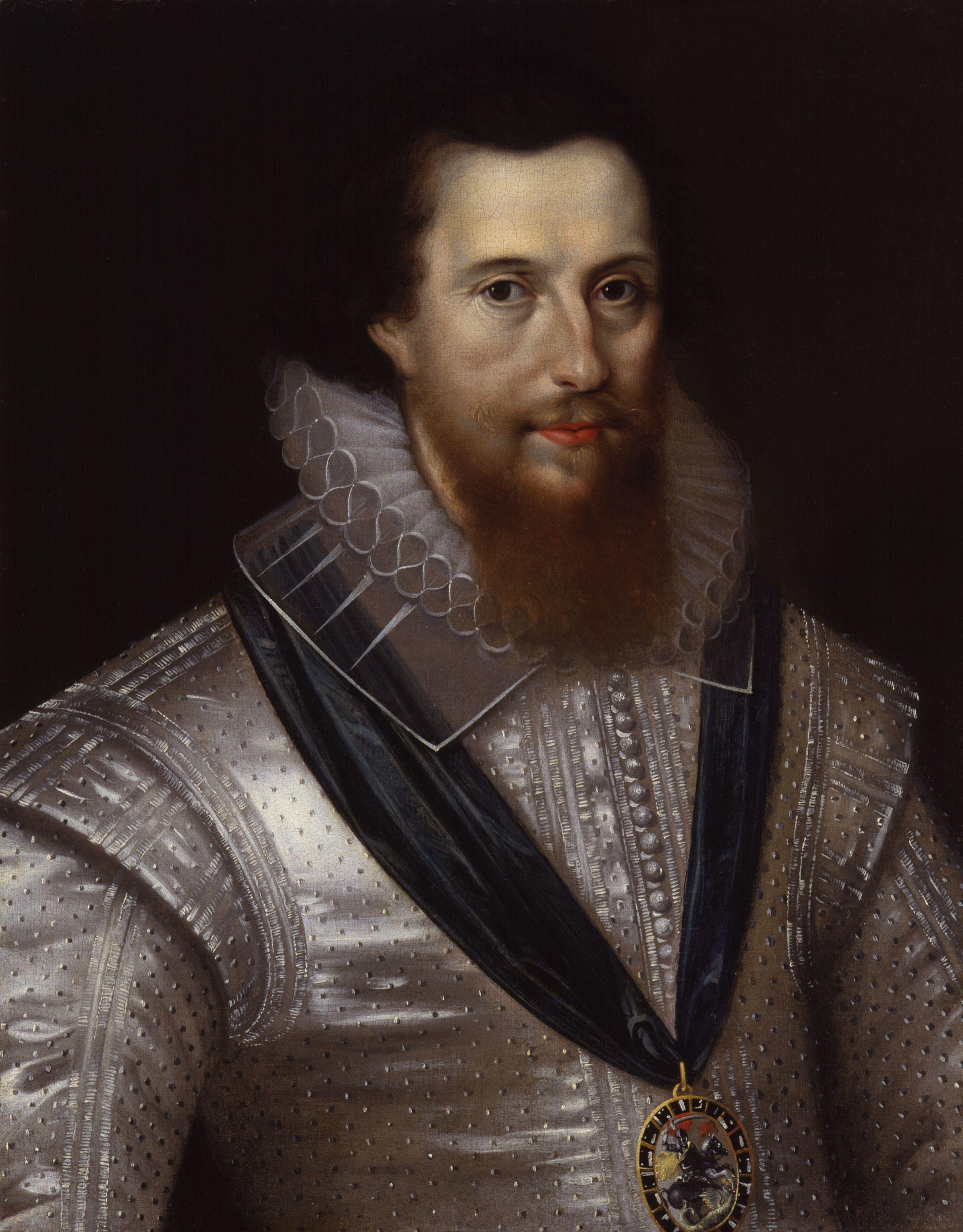
Courtier and Military Leader
Para1Robert Devereux, Earl of Essex (1566–1601), was one of Queen Elizabeth I’s favored
courtiers near the end of her reign, from about 1587 until he died in disgrace. He
served as her Master of the Horse and later as a member of the Privy Council. His
charisma and military leadership in the wake of the 1588 Spanish Armada crisis, as
well as expeditions and battles in the Netherlands, France, and Spain, made him very
popular among both the English court and populace. His fortunes changed after being
named Lord Lieutenant of Ireland in 1599 and his failure to suppress the Irish Rebellion
in 1600. He left Ireland without the Queen’s permission and was tried and convicted
by the Privy Council upon his return.
Devereaux’s Fall and Richard II
Para2In February 1601, Essex and a few sympathizers commissioned The Lord Chamberlain’s
Men to stage a performance of Shakespeare’s Richard II. The play features a king being deposed. This deeply offended and disturbed the Queen
and her advisors. Elizabeth is said to have exclaimed,
I am Richard II. Know ye not that?Essex and his 200 armed fellows entered the City of London to seek an audience with the Queen but was soon arrested. He was quickly tried and executed for treason.
Para3The Lord Chamberlain’s Men was paid 40 shillings, more than the usual 10 shillings
for the performance. They had complained that the play was so
old and long out of usethat they were afraid of a small audience. Augustine Philips, one of the players, had to go before the Privy Council to explain the company’s involvement. As Alan Nelson notes, Philips testified that they had been asked to perform
‘the deposyng and kyllyng of Kyng Rychard the Secondʼ. Phillips and his fellow actors proposed an alternative play but after negotiation were finally ‘contentʼ to play as requested.No action was taken against them. Ironically, the players also performed another play before the queen on the eve of Essex’s execution.
Shakespeare, Essex, and Henry V
Para4Before the collapse of Essex’s rebellion, Shakespeare had expressed high hopes about
the Earl’s expedition to Ireland. Near the end of the play Henry V, the Chorus describes Essex’s Irish adventure as it proclaims
Essex’s ambitions had destroyed the precarious balance of Elizabeth’s earlier reign by forcing her to side with a faction led by Robert Cecil, Lord of Burghley, who was Secretary of the Privy Council. Burghley had long been the Queen’s most trusted advisor, and Essex failed to supplant him despite his charms. After a failed 1599 campaign to put down rebellion by the Irish lords against England’s colonial rule in Ireland, Essex abandoned his post and returned to court without the Queen’s permission. She banished him and he remained under suspicion of treason. His rebellion and subsequent death occurred the next year.But now behold,In the quick forge and working house of thought,How London doth pour out her citizens!The mayor and all his brethren in best sort—Like to the senators of th’ antique Rome,With the plebeians swarming at their heels—Go forth and fetch their conqu’ring Caesar in;As, by a lower but by loving likelihood,Were now the general of our gracious empress(As in good time he may) from Ireland coming,Bringing rebellion broached on his sword,How many would the peaceful city quit,To welcome him!(Prologue.22–34)
Sources
The Oxford Companion to Shakespeare. edited by Michael Dobson, Stanley Wells, Will Sharpe, and Erin Sullivan, 2nd ed., Oxford UP, 2015.
Potter, Lois. The Life of William Shakespeare: A Critical Biography. Wiley-Blackwell, 2012.
Shapiro, James. 1599: A Year in the Life of William Shakespeare. Harper-Collins, 2005.
Open-Access Digital Resources
Best, Michael.
Elizabeth and Essex.Shakespeare’s Life and Times.Internet Shakespeare Editions. University of Victoria, 4 Jan. 2011, https://internetshakespeare.uvic.ca/Library/SLT/history/elizabeth/essex.html. Accessed 24 Feb. 2023.
Nelson, Alan H.
Examination of Augustine Phillips.Shakespeare Documented, 1 Feb. 2020, 10.37078/341.
Robert, Earl of Essex.British Broadcasting Corporation, https://www.bbc.co.uk/history/historic_figures/earl_of_essex_robert.shtml. Accessed 24 Feb. 2023.
Image Source
Studio of Marcus Gheeraerts, The Younger,. Robert Devereux, 2nd Earl of Essex. 1596–1601. Oil on wood. National Gallery of Art. Accession 1947.18.1. https://www.nga.gov/artworks/34162-robert-devereux-2nd-earl-essex.
Prosopography
Kate McPherson
Kate McPherson is Professor of English and Honors Program Director at Utah Valley
University (Orem, UT, USA). In 2015, she began working to redevelop Shakespeare’s Life and Times, created by Michael Best, into the Early Modern England Encyclopedia. Her other publications include commentary on Pericles and The Comedy of Errors for the New Oxford Shakespeare (2016); the co-edited volumes Stages of Engagement: Drama and Religion in Post-Reformation England with James Mardock (Duquesne University Press, 2014) and Shakespeare Expressed: Page, Stage, and Classroom in Shakespeare and His Contemporaries, with Kathryn M. Moncrief and Sarah Enloe (Fairleigh Dickinson University Press,
2013). With Kathryn M. Moncrief, Kate has also two edited collections, Performing Pedagogy in Early Modern England: Gender, Instruction, and Performance (Ashgate, 2011) and Performing Maternity in Early Modern England (Ashgate 2008). She has also published numerous articles on early modern maternity
in scholarly journals. Kate participated in the 2008 National Endowment for the Humanities
Institute,
Shakespeare’s Blackfriars: The Study, the Stage, the Classroom,at the American Shakespeare Center. She also served as Play Seminar Director, a public humanities position, for the Utah Shakespeare Festival in 2017 and 2018.
Leah Hamby
Leah Hamby is the primary encoder for the Early Modern England Encyclopedia. Aside from encoding, she also works as an editor for the project and contributed
several articles of her own. She has been working on the EMEE since February 2023. As of February 2026, she is soon to graduate with honours from
Utah Valley University with a major in history and a minor in creative writing. Her
other work with the LEMDO program includes remediating William Kemp’s Kemp’s Nine Day’s Wonder for the Digital Renaissance Editions.
Michael Best
Michael Best is Professor Emeritus at the University of Victoria, BC. He founded the
Internet Shakespeare Editions in 1996, and was Coordinating Editor until 2017, contributing two editions to the
ISE: King John and King Lear (the latter also available in print from Broadview Press). In print, he has published editions of works of Elizabethan magic and huswifery,
a collection of letters from the Australian goldfields, and Shakespeare on the Art of Love (2008). He contributed regular columns for the Shakespeare Newsletter on
Electronic Shakespeares,and has written many articles and chapters for both print and online books and journals, principally on questions raised by the new medium in the editing and publication of texts. He has delivered papers and plenary lectures on electronic media and the Internet Shakespeare Editions at conferences in Canada, the USA, the UK, Spain, Australia, and Japan.
Navarra Houldin
Training and Documentation Lead 2025–present. LEMDO project manager 2022–2025. Textual
remediator 2021–present. Navarra Houldin (they/them) completed their BA with a major
in history and minor in Spanish at the University of Victoria in 2022. Their primary
research was on gender and sexuality in early modern Europe and Latin America. They
are continuing their education through an MA program in Gender and Social Justice
Studies at the University of Alberta where they will specialize in Digital Humanities.
Orgography
LEMDO Team (LEMD1)
The LEMDO Team is based at the University of Victoria and normally comprises the project
director, the lead developer, project manager, junior developers(s), remediators,
encoders, and remediating editors.
University of Victoria (UVIC1)
https://www.uvic.ca/Metadata
| Authority title | The Essex Rebellion |
| Type of text | Critical |
| Publisher | University of Victoria on the Linked Early Modern Drama Online Platform |
| Series | Early Modern England Encyclopedia |
| Source |
By Kate McPherson, inspired by Michael Best’s Shakespeare’s Life and Times, Internet Shakespeare Editions
|
| Editorial declaration | This document uses Canadian English spelling |
| Edition | Released with Early Modern England Encyclopedia 1.0 |
| Sponsor(s) |
Early Modern England EncyclopediaAnthology Leads: Kate McPherson and Kate Moncrief.
|
| Encoding description | Encoded in TEI P5 according to the LEMDO Customization and Encoding Guidelines |
| Document status | published |
| Funder(s) |
Social Sciences and Humanities Research Council of Canada
Mitacs Globalink Research Internship Utah Valley University |
| License/availability |
Unless otherwise noted, intellectual copyright in EMEE Anthology pages is held by
Kate McPherson on behalf of the contributors. Copyright on the TEI-XML markup is held by the University of Victoria on behalf of the LEMDO Team. The content and TEI-XML markup in this file are licensed under a CC BY-NC-ND 4.0 license. This file is freely downloadable without permission under the following conditions:
(1) credit must be given to the authors, EMEE, and LEMDO in any subsequent use of
the files and /or data; (2) this availability statement must remain in the file; (3)
the content cannot be adapted or repurposed (except for quotations for the purposes
of academic review and citation); and (4) commercial uses are not permitted without
the knowledge and consent of the authors, EMEE, and LEMDO. Neither the content nor
the code in this file is licensed for training large language models (LLMs), ingestion
into an LLM, or any use in any artificial intelligence applications; such uses are
considered to be commercial uses and are strictly prohibited.
|