
Code of Honor
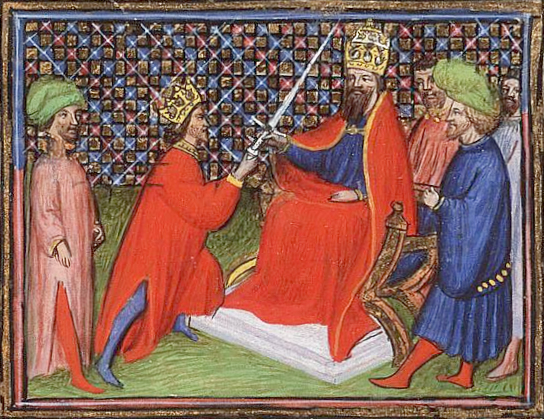
Para1The Code of Honor, also known as chivalry, was an aspect of the feudal system during
the medieval period, one especially associated knights. This system involved a code
of religious, social, and ethical beliefs and behaviors that a knight was expected
to exhibit. Although this concept was introduced in literature in the French epic
poem, The Song of Roland (circa 1100 CE), starting in 12th and 13th centuries it became an essential aspect
of English culture and society for the elite classes which persisted into the early
modern period.
Rise of Chivalry
Para2Chivalry was firmly established during the 50-year reign of King Edward III from 1327–1377.
Under feudal law, a knight was required to meet certain obligations in order to keep
their status and land. Edward III, a notable military figure, encouraged the rise
of chivalry as a means of glorifying martial values. The Hundred Years’ War, a long
and complex conflict between Edward’s family, the Plantagenets, and a series of French
kings, created a warlike society, and therefore military ethics grew as a central
anchor to society. The chivalric order also encouraged patriotism and loyalty in both
knights and citizens.
Chivalric Code
Para3The code itself and what it encompassed was never a set list of guidelines; however,
acts of chivalry and what they represented was well-known to everyone in the elite
classes during this time. Chivalry focused on a sense of bravery and honor in battle
while also exhibiting devoutness, loyalty, and gallantry toward women. Earning knighthood
became a deeply ritualized ceremony and identity involving both church and state.
This status had evolved earlier as a particularly important aspect of the Crusades
(1095–1291 CE), as the church sanctioned the knights to bear arms in the protection
of the church.
Court of Chivalry
Para4The importance of chivalry within the English society in the Middle Ages made it necessary
for the king and the court to both monitor and judge a knight’s actions. This prompted
the creation of the Court of Chivalry, which was presided over by the king, along
with the Lord High Constable and Earl Marshal of England. These three powerful individuals
could pass judgement on a knight outside of English common law, thus without a trial
or jury. They could decide, based on a knight’s actions, whether the knight should
keep their status and lands after being accused of a crime or dishonor. In the age
of Edward III, this court was used regularly as a means of controlling the chivalric
system. This court also awarded prizes based on admirable actions, with one of the
most prestigious being the Order of the Garter. This award was established by Edward
III and to this day is regarded as the one of the most prestigious awards in Britain.
This Court of Chivalry still functions today, although it is rarely convened and deals
mainly with issues regarding coats of arms. Men and women are now awarded the Order
of the Garter for ceremonial purposes only based on a record of public service and
only 24 individuals outside the royal family may hold the Order of the Garter at any
given time.
Honor and Chivalry in Shakespeare
Para5Many characters in early modern plays wrestle with the idea of honor. The question
of honor in drama typically focuses on its definition and the conflict between physical
versus moral prowess. This question is particularly prevalent in Shakespeare’s plays,
with honor as a prevalent theme in Othello, Hamlet, The Winter’s Tale, Antony and Cleopatra, and Troilus and Cressida. In Henry IV, Part I, the theme of honor is mentioned throughout, from Hotspur to Falstaff. Falstaff famously
questions the very meaning of honor in Act 5 Scene 1:
What is honor? A word. What is in that word honor? What is that honor? Air. A trim reckoning. Who hath it? He that died o' Wednesday. Doth he feel it? No. Doth he hear it? No. 'Tis insensible, then? Yea, to the dead. But will it not live with the living? No. Why? Detraction will not suffer it. Therefore, I’ll none of it. Honor is a mere scutcheon.(5.1.137–147)
Para6The question Falstaff asks is whether this idea of honor for soldiers is worth the
pain and fear of what is required. In the end, he feels as though it is not. Falstaff’s
feelings, while unpatriotic, give insight into the question of honor and what it meant
in the early modern period.
Sources
Hodgdon, Barabara.
Honor and Arms: Elizabethan Neochivalric Culture and the Military Trades.in Henry the Fourth, Part One: Tests and Contexts, edited by Barabard Hodgdon. Bedford Books, 1997.
Saul, Nigel. Chivalry in Medieval England. Harvard UP, 2011.
Taylor, Craig. Chivalry and the Ideals of Knighthood in France during the Hundred Years War. Cambridge UP, 2013.
Open-Access Digital Resources
Best, Michael.
Chivalry and the Code of Honour.Shakespeare’s Life and Times.Internet Shakespeare Editions. University of Victoria, 4 Jan. 2011, https://internetshakespeare.uvic.ca/Library/SLT/society/court%20life/chivalry.html. Accessed 15 Oct. 2018.
Britannica Editors.
Chivalry.Encyclopædia Britannica, 30 Aug. 2016, https://www.britannica.com/topic/chivalry. Accessed 15 Oct. 2018.
Highfield, J.R.L., and Thomas Frederick Tout.
Edward III.Encyclopædia Britannica, 17 Jun. 2018, https://www.britannica.com/biography/Edward-III-king-of-England. Accessed 15 Oct. 2018.
Image Source
Master, Virgil. Edward III Becomes Vicar to Emperor Ludwig. c. 1410. Wikimedia. https://upload.wikimedia.org/wikipedia/commons/d/d9/Edward_III_becomes_Vicar_to_the_Emperor_Ludwig_V.jpg.

Prosopography
Kate McPherson
Kate McPherson is Professor of English and Honors Program Director at Utah Valley
University (Orem, UT, USA). In 2015, she began working to redevelop Shakespeare’s Life and Times, created by Michael Best, into the Early Modern England Encyclopedia. Her other publications include commentary on Pericles and The Comedy of Errors for the New Oxford Shakespeare (2016); the co-edited volumes Stages of Engagement: Drama and Religion in Post-Reformation England with James Mardock (Duquesne University Press, 2014) and Shakespeare Expressed: Page, Stage, and Classroom in Shakespeare and His Contemporaries, with Kathryn M. Moncrief and Sarah Enloe (Fairleigh Dickinson University Press,
2013). With Kathryn M. Moncrief, Kate has also two edited collections, Performing Pedagogy in Early Modern England: Gender, Instruction, and Performance (Ashgate, 2011) and Performing Maternity in Early Modern England (Ashgate 2008). She has also published numerous articles on early modern maternity
in scholarly journals. Kate participated in the 2008 National Endowment for the Humanities
Institute,
Shakespeare’s Blackfriars: The Study, the Stage, the Classroom,at the American Shakespeare Center. She also served as Play Seminar Director, a public humanities position, for the Utah Shakespeare Festival in 2017 and 2018.
Kelsie Tylka
Kelsie Tylka was a student at Utah Valley University.
Leah Hamby
Leah Hamby is the primary encoder for the Early Modern England Encyclopedia. Aside from encoding, she also works as an editor for the project and contributed
several articles of her own. She has been working on the EMEE since February 2023. As of February 2026, she is soon to graduate with honours from
Utah Valley University with a major in history and a minor in creative writing. Her
other work with the LEMDO program includes remediating William Kemp’s Kemp’s Nine Day’s Wonder for the Digital Renaissance Editions.
Michael Best
Michael Best is Professor Emeritus at the University of Victoria, BC. He founded the
Internet Shakespeare Editions in 1996, and was Coordinating Editor until 2017, contributing two editions to the
ISE: King John and King Lear (the latter also available in print from Broadview Press). In print, he has published editions of works of Elizabethan magic and huswifery,
a collection of letters from the Australian goldfields, and Shakespeare on the Art of Love (2008). He contributed regular columns for the Shakespeare Newsletter on
Electronic Shakespeares,and has written many articles and chapters for both print and online books and journals, principally on questions raised by the new medium in the editing and publication of texts. He has delivered papers and plenary lectures on electronic media and the Internet Shakespeare Editions at conferences in Canada, the USA, the UK, Spain, Australia, and Japan.
Navarra Houldin
Training and Documentation Lead 2025–present. LEMDO project manager 2022–2025. Textual
remediator 2021–present. Navarra Houldin (they/them) completed their BA with a major
in history and minor in Spanish at the University of Victoria in 2022. Their primary
research was on gender and sexuality in early modern Europe and Latin America. They
are continuing their education through an MA program in Gender and Social Justice
Studies at the University of Alberta where they will specialize in Digital Humanities.
Orgography
LEMDO Team (LEMD1)
The LEMDO Team is based at the University of Victoria and normally comprises the project
director, the lead developer, project manager, junior developers(s), remediators,
encoders, and remediating editors.
University of Victoria (UVIC1)
https://www.uvic.ca/Metadata
| Authority title | Code of Honor |
| Type of text | Critical |
| Publisher | University of Victoria on the Linked Early Modern Drama Online Platform |
| Series | Early Modern England Encyclopedia |
| Source |
By Kelsie Tylka, inspired by Michael Best’s Shakespeare’s Life and Times, Internet Shakespeare Editions
|
| Editorial declaration | This document uses Canadian English spelling |
| Edition | Released with Early Modern England Encyclopedia 1.0 |
| Sponsor(s) |
Early Modern England EncyclopediaAnthology Leads: Kate McPherson and Kate Moncrief.
|
| Encoding description | Encoded in TEI P5 according to the LEMDO Customization and Encoding Guidelines |
| Document status | published, peer-reviewed |
| Funder(s) |
Social Sciences and Humanities Research Council of Canada
Mitacs Globalink Research Internship Utah Valley University |
| License/availability |
Intellectual copyright in this entry is held by Kate McPherson on behalf of the contributors. Copyright on the TEI-XML markup is held by the University of Victoria on behalf of the LEMDO Team. The content and TEI-XML markup in this file are licensed under a CC BY-NC_ND 4.0 license. This file is freely downloadable without permission under the following conditions:
(1) credit must be given to the authors, EMEE, and LEMDO in any subsequent use of
the files and /or data; (2) this availability statement must remain in the file; (3)
the content cannot be adapted or repurposed (except for quotations for the purposes
of academic review and citation); and (4) commercial uses are not permitted without
the knowledge and consent of the authors, EMEE, and LEMDO. Neither the content nor
the code in this file is licensed for training large language models (LLMs), ingestion
into an LLM, or any use in any artificial intelligence applications; such uses are
considered to be commercial uses and are strictly prohibited.
|