
Children
The Idea of Childhood
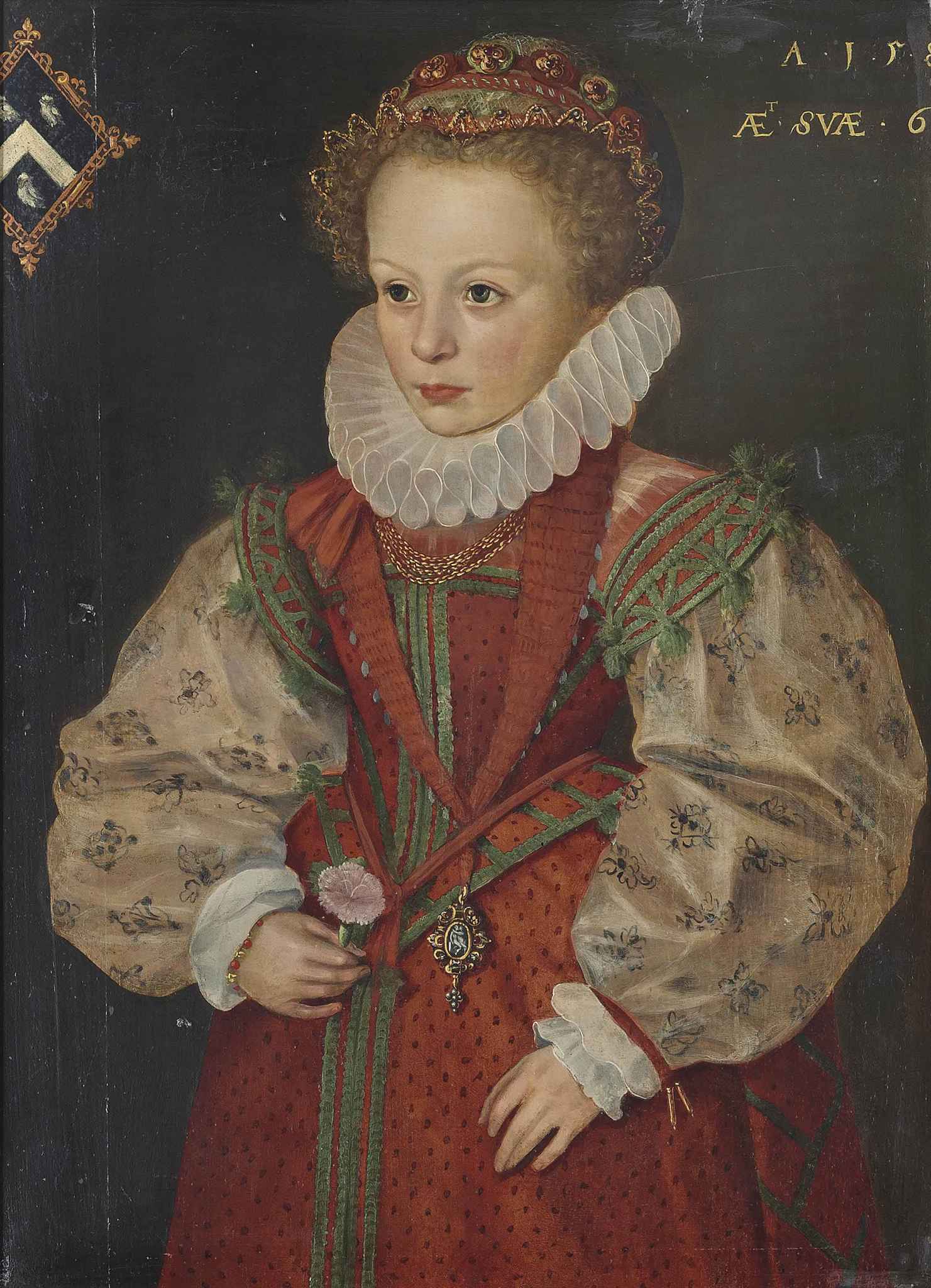
Para1In many ways, early modern English children were thought of as miniature adults—notice
that the girl in the painting that leads this article wears a large ruff typical of
late Elizabethan fashions, rather than clothing suitable for her as a child. This
typifies the belief in the early modern period that rather than having different needs
and desires, children needed to be molded into adults through strict regimes and expectations
about behavior. Children were seen as inferior in terms of reason, spiritual development,
and self-control—all of which led to an educational approach that was rigid and focused
on obedience.
Para2Similarly, youth was thought of as a separate age (after childhood and before manhood).
Its symptoms and behaviors often appear in Shakespeare’s plays. The old shepherd in
The Winter’s Tale describes a young man, with complaints about his behavior that seem strikingly modern:
I would there were no age between ten and three-and-twenty or that a youth would sleep out the rest, for there is nothing in the between but getting wenches with child, wronging the ancientry, stealing, fighting.(3.3.58–62)
Parents and Children
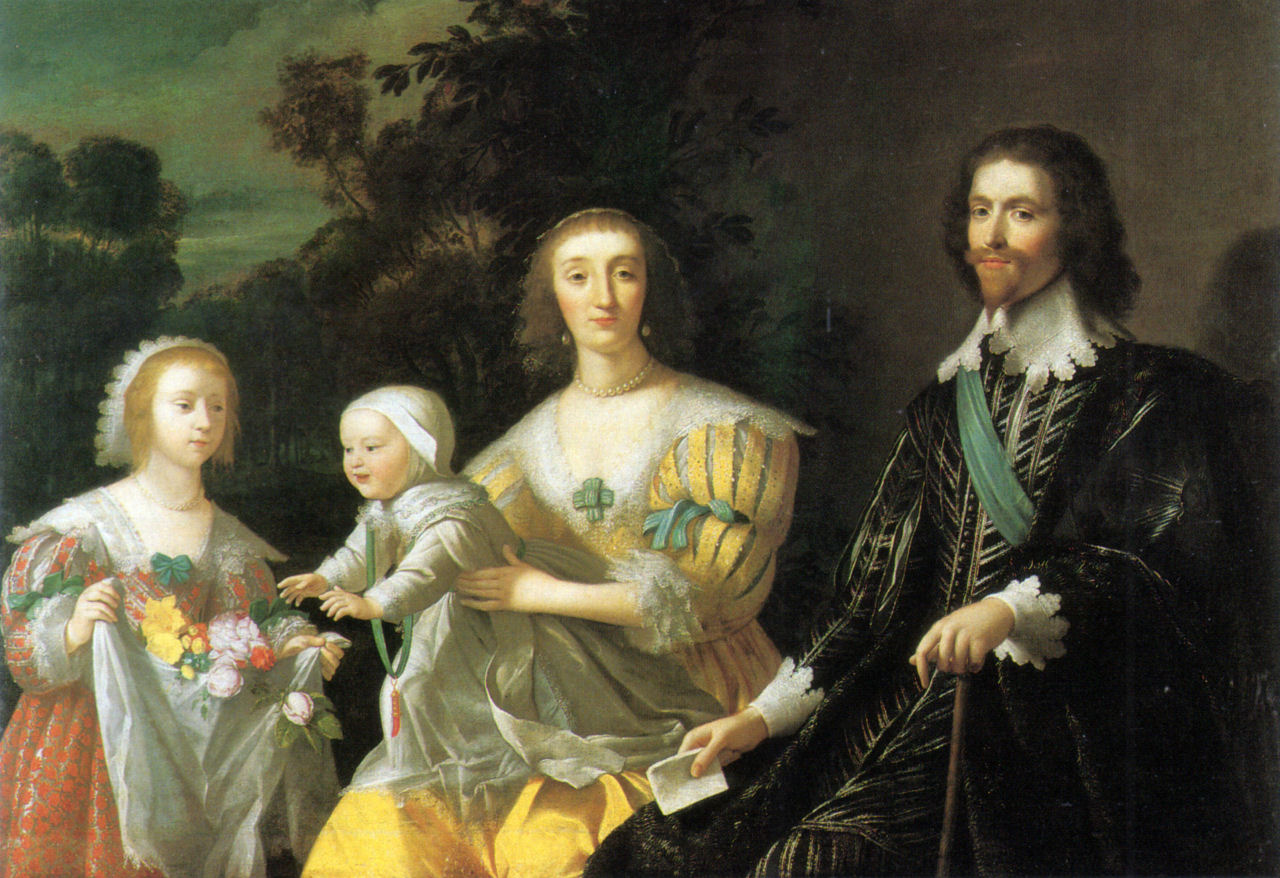
Para3Infant and child mortality was high in the period, with children having roughly a
50% chance of living to age five. Common diseases (whooping cough, pneumonia, dysentery),
fevers, and influenza killed many young children. Notable outbreaks of the bubonic
plague in 1563, 1603, and 1625 killed high numbers of children. Despite their frequent
bereavement, early modern parents loved their children, prayed for their survival,
and rejoiced when they were born or healed from an illness or injury.
Para4Throughout their lives, children regularly knelt before their parents to receive a
blessing, even once they had reached adulthood. Parental responsibility and authority
extended into what we would consider early adulthood. Children were expected to obey
their parents as subjects were to obey the sovereign. Especially in the gentry and
merchant classes, parents were instrumental in arranging marriages for their children.
Just as the sovereign had to govern with justice and concern for the welfare of citizens,
parents were expected to be responsible in the choice of a spouse for their children.
Even girls were expected to consent to the parents’ choice of mate, as Baptista notes
regarding Katerina and Petruchio in The Taming of the Shrew (2.1.128–129).
Social and Economic Training
Para5In noble or wealthy families, after they had been nursed (often by a hired wet-nurse
rather than by their mother), children were usually sent to another high-ranking house
to be trained in decorum. The effect was rather like sending them to a boarding-school.
Middle and lower-class families usually kept their children at home but employed them
at an early age in business or household duties. Regardless of class, a large number
of families in the period were fragmented because of death and remarriage—resulting
in many stepfamilies.
Para6In the households of commoners, children were more likely to be nursed by their mothers;
wet nurses were only employed if the mother had died or was too unwell to nurse an
infant. As they grew, girls were given lessons in housekeeping, such as animal care,
sewing, and cooking. Boys given rudimentary tasks that may have led them to apprenticeships
with one of the guilds of skilled tradesmen.
Children in Shakespeare’s Plays
Para7There are approximately 29 children mentioned in 27 of Shakespeare’s plays, for the
most part unnamed and called simply
Boyor
Pagein the list of characters. Most often, they are minor servants. Less often, they are incidental characters who play a minor role in the plot, such as The Winter’s Tale, where the boy Mamillius has a speaking part that helps illuminate Leontes’s growing instability or in Richard III, where young York has a conversation with his grandmother that illustrates Richard’s diabolical character.
Para8In some other instances, such as The Merry Wives of Windsor, a group of unnamed children dress as fairies in Act 5 or in A Midsummer Night’s Dream, the changeling boy causes contention between Titania and Oberon. The children portrayed
in Shakespeare’s plays are sometimes precocious—or again simply miniature (slightly
naive) adults. Lady MacDuff’s son argues wittily with her when she claims that his
father is dead, tries to defend her when she is attacked by Macbeth’s murderers, and
is stabbed by one who cries out as he attacks,
What, you egg!(4.2.79) in a shocking murder that reveals the cruelty of the new king’s ways. Later in the play, Macduff’s palpable grief for the loss of his family is one of the play’s most moving scenes.
Sources
Bailey, Merridee L. Socialising the Child in Late Medieval England, c. 1400–1600. York Medieval Press, 2012.
Cressy, David. Birth, Marriage, and Death: Ritual, Religion, and the Life-Cycle in Tudor and Stuart
England. Oxford UP, 1997.
Witmore, Michael. Pretty Creatures: Children and Fiction in the English Renaissance. Cornell UP, 2007.
Open-Access Digital Resources
Best, Michael.
Children.Shakespeare’s Life and Times. Internet Shakespeare Editions. University of Victoria, 4 Jan. 2011,https://internetshakespeare.uvic.ca/Library/SLT/society/family/children.html. Accessed 9 Feb. 2018.
Payne, Linda.
Health in England (16th–18th c.).Children and Youth in History, https://cyh.rrchnm.org/teaching-modules/166.html. Accessed 9 May 2024.
Witmore, Michael.
The Early Modern Child.Representing Childhood. University of Pittsburgh, http://www.representingchildhood.pitt.edu/early_modern_child.htm. Accessed 10 May 2024.
Image Source
After Honthorst, Gerard van. The Duke of Buckingham and his Family. 1628. Oil on canvas. National Portrait Gallery. Wikimedia. https://en.wikipedia.org/wiki/File:George_Villiers_Duke_of_Buckingham_and_Family_1628.jpg.

Portrait of a Young Girl from the Prescott or Hewitt family, Three-Quarter-Length,
in a Red Dress Holding a Carnation in her Right Hand. 1580–1589. Oil on panel. Wikimedia Commons. https://commons.wikimedia.org/wiki/File:English_School_1580s_Portrait_of_a_Young_Girl.jpg.

Prosopography
Kate McPherson
Kate McPherson is Professor of English and Honors Program Director at Utah Valley
University (Orem, UT, USA). In 2015, she began working to redevelop Shakespeare’s Life and Times, created by Michael Best, into the Early Modern England Encyclopedia. Her other publications include commentary on Pericles and The Comedy of Errors for the New Oxford Shakespeare (2016); the co-edited volumes Stages of Engagement: Drama and Religion in Post-Reformation England with James Mardock (Duquesne University Press, 2014) and Shakespeare Expressed: Page, Stage, and Classroom in Shakespeare and His Contemporaries, with Kathryn M. Moncrief and Sarah Enloe (Fairleigh Dickinson University Press,
2013). With Kathryn M. Moncrief, Kate has also two edited collections, Performing Pedagogy in Early Modern England: Gender, Instruction, and Performance (Ashgate, 2011) and Performing Maternity in Early Modern England (Ashgate 2008). She has also published numerous articles on early modern maternity
in scholarly journals. Kate participated in the 2008 National Endowment for the Humanities
Institute,
Shakespeare’s Blackfriars: The Study, the Stage, the Classroom,at the American Shakespeare Center. She also served as Play Seminar Director, a public humanities position, for the Utah Shakespeare Festival in 2017 and 2018.
Leah Hamby
Leah Hamby is the primary encoder for the Early Modern England Encyclopedia. Aside from encoding, she also works as an editor for the project and contributed
several articles of her own. She has been working on the EMEE since February 2023. As of February 2026, she is soon to graduate with honours from
Utah Valley University with a major in history and a minor in creative writing. Her
other work with the LEMDO program includes remediating William Kemp’s Kemp’s Nine Day’s Wonder for the Digital Renaissance Editions.
Michael Best
Michael Best is Professor Emeritus at the University of Victoria, BC. He founded the
Internet Shakespeare Editions in 1996, and was Coordinating Editor until 2017, contributing two editions to the
ISE: King John and King Lear (the latter also available in print from Broadview Press). In print, he has published editions of works of Elizabethan magic and huswifery,
a collection of letters from the Australian goldfields, and Shakespeare on the Art of Love (2008). He contributed regular columns for the Shakespeare Newsletter on
Electronic Shakespeares,and has written many articles and chapters for both print and online books and journals, principally on questions raised by the new medium in the editing and publication of texts. He has delivered papers and plenary lectures on electronic media and the Internet Shakespeare Editions at conferences in Canada, the USA, the UK, Spain, Australia, and Japan.
Navarra Houldin
Training and Documentation Lead 2025–present. LEMDO project manager 2022–2025. Textual
remediator 2021–present. Navarra Houldin (they/them) completed their BA with a major
in history and minor in Spanish at the University of Victoria in 2022. Their primary
research was on gender and sexuality in early modern Europe and Latin America. They
are continuing their education through an MA program in Gender and Social Justice
Studies at the University of Alberta where they will specialize in Digital Humanities.
Oluwaseun Akintola
Oluwaseun Akintola is a student pursuing an English major and Psychology minor at
the University of Victoria. She has had the opportunity of working for LEMDO as the
recipient of the Undergraduate Student Research Award (USRA) from the Social Sciences
and Humanities Research Council of Canada (SSHRC) for the summers of 2024 and 2025.
Her research primarily focuses on premodern critical race theory in early modern drama,
researching racial representation, and constructions of identity in Shakespeare’s
plays Othello and The Merchant of Venice.
Orgography
LEMDO Team (LEMD1)
The LEMDO Team is based at the University of Victoria and normally comprises the project
director, the lead developer, project manager, junior developers(s), remediators,
encoders, and remediating editors.
University of Victoria (UVIC1)
https://www.uvic.ca/Metadata
| Authority title | Children |
| Type of text | Critical |
| Publisher | University of Victoria on the Linked Early Modern Drama Online Platform |
| Series | Early Modern England Encyclopedia |
| Source |
By Kate McPherson, inspired by Michael Best’s Shakespeare’s Life and Times, Internet Shakespeare Editions
|
| Editorial declaration | This document uses Canadian English spelling |
| Edition | Released with Early Modern England Encyclopedia 1.0 |
| Sponsor(s) |
Early Modern England EncyclopediaAnthology Leads: Kate McPherson and Kate Moncrief.
|
| Encoding description | Encoded in TEI P5 according to the LEMDO Customization and Encoding Guidelines |
| Document status | IML-TEI_proofed, peer-reviewed |
| Funder(s) |
Social Sciences and Humanities Research Council of Canada
Mitacs Globalink Research Internship Utah Valley University |
| License/availability |
Unless otherwise noted, intellectual copyright in EMEE Anthology pages is held by
Kate McPherson on behalf of the contributors. Copyright on the TEI-XML markup is held by the University of Victoria on behalf of the LEMDO Team. The content and TEI-XML markup in this file are licensed under a CC BY-NC-ND 4.0 license. This file is freely downloadable without permission under the following conditions:
(1) credit must be given to the authors, EMEE, and LEMDO in any subsequent use of
the files and /or data; (2) this availability statement must remain in the file; (3)
the content cannot be adapted or repurposed (except for quotations for the purposes
of academic review and citation); and (4) commercial uses are not permitted without
the knowledge and consent of the authors, EMEE, and LEMDO. Neither the content nor
the code in this file is licensed for training large language models (LLMs), ingestion
into an LLM, or any use in any artificial intelligence applications; such uses are
considered to be commercial uses and are strictly prohibited.
|