
Women’s Autobiographies
Overview
Para1During the early modern period, and especially with the rise of Puritanism, many literate
women began to keep diaries or write autobiographies that focused on their spiritual
lives. Women may have been encouraged by their spiritual advisors to keep a record
of their prayers, their devotional lives, and their reflections on scripture. The
women writers discussed here focussed their autobiographical writing on their religious
convictions and practices, offering a kind of ledger of their spirituality.
Grace, Lady Mildmay (1552–1620)
Para2Grace Sharington, later the wife of Sir Anthony Mildmay, was the daughter of a Wiltshire
knight. She was educated at home in Protestant religious practices, as well as all
the skills expected of a gentlewoman, including household management such as preparing
medicine and elaborate foods, music, and needlework. At age 15, she married Anthony
Mildmay, the son of the chancellor of the Exchequer. Unlike many marriages among the
upper classes, their marriage settlement, including a dowry and jointure, was not
written out, which led to both of them feuding with various members of their families
for many years over issues of money and property.
Para3Grace Mildmay developed her medical ability to a higher level than many of her peers.
She wrote extensively about the causes and treatments of illnesses and the preparation
of various medicines to treat them. Her surviving papers indicate she investigated
and supervised the manufacture of large batches of complex medicines using both herbal
and chemical formulations. She documents the cordials, potions, and ointments she
used to treat both mental and physical ailments. She did not perform any surgery or
keep records of her patients.
Para4Her Autobiography was written about 1617–1620, after the death of her husband. This document acts as
an introduction to hundreds of pages of spiritual meditations she kept for many decades
prior. It develops a picture of her upbringing as a member of the gentry and a writer
willing to autonomously publish her moral and spiritual advice. She documents her
extensive spiritual and moral education under the directives of her very strict parents,
as well as the long battles with various family members over her inheritance. Mildmay’s
strong voice and extensive medical skills, however, do not override her acceptance
of the gender norms of her time. Paraphrasing 1 Timothy 2.11–12, she comments that
a woman’s role is to learn
with silence and all subjectionand
neither usurp authority over the man, but be in silence(qtd. in Bedford 171).
Para5She notes her reason for composing the Autobiography:
All these things coming into my mind, I thought good to set them down to my daughter and her children, as familiar talk and communication with them, I being dead, as if I were alive. And I do therewthall heartily pray them to accept thereof, and of the whole book of my meditations, which hath been the exercise of my mind from my youth until this day. (qtd. in Martin 213)
Margaret, Lady Hoby (1571–1633)
Para6Margaret Dakins was raised in Yorkshire, the daughter of a wealthy gentleman. An heiress
educated in the household of Henry Hastings, Earl of Huntington, she was married three
times to prominent younger sons of influential families. Her first husband was Walter
Devereaux, brother to the second Earl of Essex who later rebelled against Elizabeth
I. Her second husband was Thomas Sidney, brother to the courtier and poet, Sir Philip
Sidney. Widowed for the second time by the age of 24, in 1596 she married the puritan
politician, Sir Thomas Hoby. She had no children.
Para7Lady Hoby’s diary provides the first diary of an Elizabethan woman’s daily life, mainly
a detailed record of her religious pursuits, including daily prayer, meditation, and
reading. This account of Lady Hoby’s spiritual discipline downplays her other daily
activities. But the diary also reveals how she managed her husband’s estates during
his frequent absences, how she dealt with her many servants, and her interests in
music and gardening. Several fascinating passages detail her attending on women in
childbirth or refer to the medical advice and treatment she provided to her servants
and local citizens, such as when an infant born without an anus was brought to her.
She performed surgery on the child to no avail in an attempt to find an outlet for
the child’s bowels (Bedford 183).
Para8Margaret Hoby also explains that she resisted her last husband’s pressure to gift
property from her first marriage, a manor in Hackness, to him and his heirs until
the year before her death. Although the diary focuses on her spiritual devotions within
her everyday life, readers may enjoy the nonreligious details to build up a picture
of her domestic life.
Sources
Bedford, Ronald, et al. Early Modern English Lives: Autobiography and Self-Representation 1550–1660. Ashgate, 2007. See
A Gendered Genre: Autobiographical Writings by Three Early Modern Women.
Martin, Randall. Women Writers in Renaissance England. Addison Wesley Longman, 1997.
Moody, Joanna. The Private Life of an Elizabethan Lady: The Dairy of Lady Margaret Hoby, 1599–1605. Sutton Publishing, 1998.
Pollock, Linda A.
Mildmay née Sharington, Grace, Lady Mildmay (c. 1552–1620), Memoirist and Medical Practitioner.Oxford Dictionary of National Biography, vol. 22, Oxford University Press, 23 Sept. 2004.
Slack, Paul.
Hoby née Dakins, Margaret, Lady Hoby (bap. 1571, d. 1633), Diarist.Oxford Dictionary of National Biography, vol. 10, Oxford University Press, 23 Sept. 2004.
Open-Access Digital Resources
Best, Michael.
Lady Margaret Hoby.Shakespeare’s Life and Times, Internet Shakespeare Editions, University of Victoria, 04 Jan. 2011, https://internetshakespeare.uvic.ca/Library/SLT/literature/women%20writers/hoby.html. Accessed 25 Apr. 2023.
Biehl, Brighid.
Medicine and Autonomy in Early Modern Europe.Domestic Knowledge, 2023, https://domesticknowledge.pubpub.org/pub/4vz98t0v. Accessed 11 Feb. 2026.
Image Sources
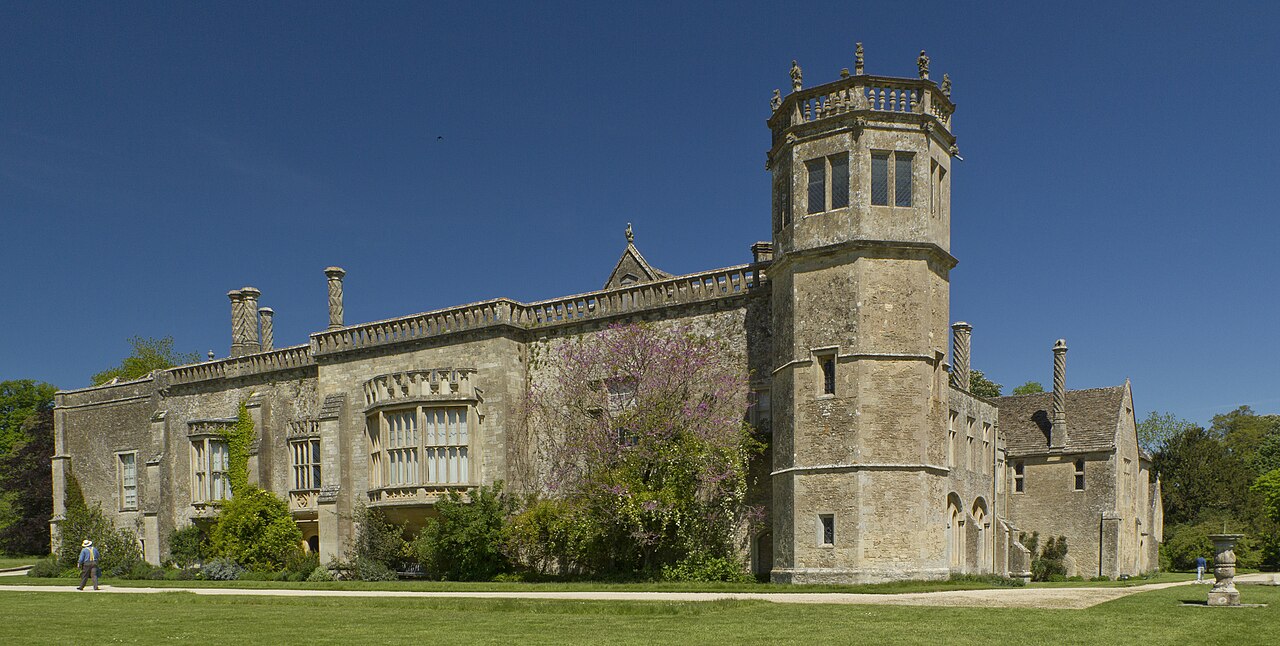
Skeates, Barry. Photograph of Lacock Abbey. 04 June 2013, Wikimedia Commons, https://commons.wikimedia.org/wiki/File:Lacock_Abbey_(9040853954).jpg. Accessed 11 Feb. 2026.
.jpg)
Prosopography
Janelle Jenstad
Janelle Jenstad is a Professor of English at the University of Victoria, Director
of The Map of Early Modern London, and Director of Linked Early Modern Drama Online. With Jennifer Roberts-Smith and Mark Beatrice Kaethler, she co-edited Shakespeare’s Language in Digital Media: Old Words, New Tools (Routledge). She has edited John Stow’s A Survey of London (1598 text) for MoEML and is currently editing The Merchant of Venice (with Stephen Wittek) and Heywood’s 2 If You Know Not Me You Know Nobody for DRE. Her articles have appeared in Digital Humanities Quarterly, Elizabethan Theatre, Early Modern Literary Studies, Shakespeare Bulletin, Renaissance and Reformation, and The Journal of Medieval and Early Modern Studies. She contributed chapters to Approaches to Teaching Othello (MLA); Teaching Early Modern Literature from the Archives (MLA); Institutional Culture in Early Modern England (Brill); Shakespeare, Language, and the Stage (Arden); Performing Maternity in Early Modern England (Ashgate); New Directions in the Geohumanities (Routledge); Early Modern Studies and the Digital Turn (Iter); Placing Names: Enriching and Integrating Gazetteers (Indiana); Making Things and Drawing Boundaries (Minnesota); Rethinking Shakespeare Source Study: Audiences, Authors, and Digital Technologies (Routledge); and Civic Performance: Pageantry and Entertainments in Early Modern London (Routledge). For more details, see janellejenstad.com.
Kate McPherson
Kate McPherson is Professor of English and Honors Program Director at Utah Valley
University (Orem, UT, USA). In 2015, she began working to redevelop Shakespeare’s Life and Times, created by Michael Best, into the Early Modern England Encyclopedia. Her other publications include commentary on Pericles and The Comedy of Errors for the New Oxford Shakespeare (2016); the co-edited volumes Stages of Engagement: Drama and Religion in Post-Reformation England with James Mardock (Duquesne University Press, 2014) and Shakespeare Expressed: Page, Stage, and Classroom in Shakespeare and His Contemporaries, with Kathryn M. Moncrief and Sarah Enloe (Fairleigh Dickinson University Press,
2013). With Kathryn M. Moncrief, Kate has also two edited collections, Performing Pedagogy in Early Modern England: Gender, Instruction, and Performance (Ashgate, 2011) and Performing Maternity in Early Modern England (Ashgate 2008). She has also published numerous articles on early modern maternity
in scholarly journals. Kate participated in the 2008 National Endowment for the Humanities
Institute,
Shakespeare’s Blackfriars: The Study, the Stage, the Classroom,at the American Shakespeare Center. She also served as Play Seminar Director, a public humanities position, for the Utah Shakespeare Festival in 2017 and 2018.
Katelyn Ekker
Katelyn Ekker was an Honors student at Utah Valley University.
Leah Hamby
Leah Hamby is the primary encoder for the Early Modern England Encyclopedia. Aside from encoding, she also works as an editor for the project and contributed
several articles of her own. She has been working on the EMEE since February 2023. As of February 2026, she is soon to graduate with honours from
Utah Valley University with a major in history and a minor in creative writing. Her
other work with the LEMDO program includes remediating William Kemp’s Kemp’s Nine Day’s Wonder for the Digital Renaissance Editions.
Michael Best
Michael Best is Professor Emeritus at the University of Victoria, BC. He founded the
Internet Shakespeare Editions in 1996, and was Coordinating Editor until 2017, contributing two editions to the
ISE: King John and King Lear (the latter also available in print from Broadview Press). In print, he has published editions of works of Elizabethan magic and huswifery,
a collection of letters from the Australian goldfields, and Shakespeare on the Art of Love (2008). He contributed regular columns for the Shakespeare Newsletter on
Electronic Shakespeares,and has written many articles and chapters for both print and online books and journals, principally on questions raised by the new medium in the editing and publication of texts. He has delivered papers and plenary lectures on electronic media and the Internet Shakespeare Editions at conferences in Canada, the USA, the UK, Spain, Australia, and Japan.
Navarra Houldin
Training and Documentation Lead 2025–present. LEMDO project manager 2022–2025. Textual
remediator 2021–present. Navarra Houldin (they/them) completed their BA with a major
in history and minor in Spanish at the University of Victoria in 2022. Their primary
research was on gender and sexuality in early modern Europe and Latin America. They
are continuing their education through an MA program in Gender and Social Justice
Studies at the University of Alberta where they will specialize in Digital Humanities.
Orgography
LEMDO Team (LEMD1)
The LEMDO Team is based at the University of Victoria and normally comprises the project
director, the lead developer, project manager, junior developers(s), remediators,
encoders, and remediating editors.
University of Victoria (UVIC1)
https://www.uvic.ca/Metadata
| Authority title | Women’s Autobiographies |
| Type of text | Critical |
| Publisher | University of Victoria on the Linked Early Modern Drama Online Platform |
| Series | Early Modern England Encyclopedia |
| Source |
By Katelyn Ekker and Kate McPherson, inspired by Michael Best’s Shakespeare’s Life and Times, Internet Shakespeare Editions
|
| Editorial declaration | This document uses Canadian English spelling |
| Edition | Released with Early Modern England Encyclopedia 1.0 |
| Sponsor(s) |
Early Modern England EncyclopediaAnthology Leads: Kate McPherson and Kate Moncrief.
|
| Encoding description | Encoded in TEI P5 according to the LEMDO Customization and Encoding Guidelines |
| Document status | published, peer-reviewed |
| Funder(s) |
Social Sciences and Humanities Research Council of Canada
Mitacs Globalink Research Internship Utah Valley University |
| License/availability |
Unless otherwise noted, intellectual copyright in EMEE Anthology pages is held by
Kate McPherson on behalf of the contributors. Copyright on the TEI-XML markup is held by the University of Victoria on behalf of the LEMDO Team. The content and TEI-XML markup in this file are licensed under a CC BY-NC-ND 4.0 license. This file is freely downloadable without permission under the following conditions:
(1) credit must be given to the authors, EMEE, and LEMDO in any subsequent use of
the files and /or data; (2) this availability statement must remain in the file; (3)
the content cannot be adapted or repurposed (except for quotations for the purposes
of academic review and citation); and (4) commercial uses are not permitted without
the knowledge and consent of the authors, EMEE, and LEMDO. Neither the content nor
the code in this file is licensed for training large language models (LLMs), ingestion
into an LLM, or any use in any artificial intelligence applications; such uses are
considered to be commercial uses and are strictly prohibited.
|