
Astrology in Shakespeare’s Day
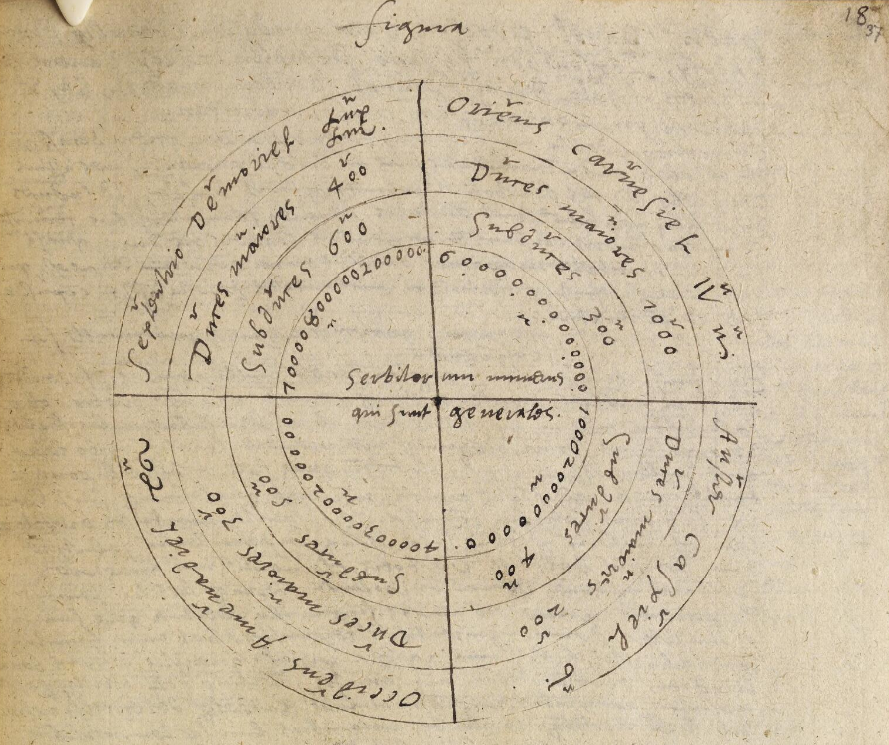
Para1In Elizabethan culture and society, astrology and fate were thought to rule over people’s
day to day lives. Even the ministers of the new queen, Elizabeth I, asked influential
mathematician and astrologer Dr. John Dee to name a good date for her coronation in
1558.
Para2People performed astrological calculations to organize their own lives and sometimes
they relied on printed templates. Simon Forman (1552–1611) was a well-known astrologer
of the time who attended some of William Shakespeare’s plays. He also kept a set of
astrological diaries. Forman created charts to know when his health would improve,
when was the best time to send letters to patrons, and how to locate some of his stolen
belongings.
Para3Richard Napier (1559–1634) consulted Simon Forman with enquiries about stolen goods
and later about melancholy. These interactions inspired Napier to become Forman’s
astrological protégé. He was devoted to astrology, alchemy, various forms of magic,
and theology. He also developed expertise in the realms of the divine and spiritual,
increasing his reputation. The work of people like Forman and Napier helped spread
and reaffirm the belief that the stars and planets influenced earthly affairs.
Para4Using astrology was not without controversy, however. Detractors published attacks
on astrology that critiqued its reliability as well as its potentially demonic or
Satanic connections.
References to Astrology in Shakespeare’s Plays
Para5Shakespeare incorporates astrological elements within many of his plays. In Romeo and Juliet, the pair is referred to as
star-crossed loversin the prologue to inform the audience that interaction between the doomed couple is fated by the stars.
Para6In Julius Caesar, Caesar makes a powerful assertion at the notion he could be killed (3.1.61):
But I am constant as the Northern Star.Here, Caesar compares himself with a powerful and everlasting entity in the realm of astrology, the north star, which provides literal and figurative guidance for mortals to navigate the world. The reference to the stars symbolizes Caesar’s self-proclaimed power and authority over death and fate.
Para7Within Shakespeare’s Hamlet, the Prince of Denmark writes Ophelia a powerful love letter,
Doubt thou the stars are fire, /Doubt that the sun doth move, /Doubt truth to be a liar, /But never doubt I love(2.2.116–119). Astrological entities such as the stars and sun were believed by some to be the most significant heavenly forces that dictated people’s fates. Here, Hamlet tells Ophelia that she might doubt the authenticity and powers surrounding these astrological figures, but that their love is something she cannot doubt, implying that it is more powerful than fate itself.
Rebutals of Astrology in Shakespeare’s Plays
Para8Shakespeare also portrays problems with believing that the stars dictate people’s
fate or that astrology diminished free will. In Julius Caesar, Cassius claims
The fault, dear Brutus, is not in our stars, but in ourselves, that we are underlings(1.2.140–141). Here, he wants to deny the star’s role in determining his fate, preferring to claim control of his life through his own free will.
Para9As Katherine Walker, a scholar of early modern England, notes,
For every figure on the early modern stage who reads the celestial heavens for causes […] there are those who mock such dependence on astrology.
Sources
Dawson, Mark S.
Astrology and Human Variation in Early Modern England.The Historical Journal, vol. 56, no. 1, Mar. 2013, pp. 31-53. doi: 10.1017/S0018246X12000374.
Gürcü, Özge Özkan.
The Interaction of Fate and Free Will in Shakespeare’s Hamlet.ESSE Messenger, vol. 25, no. 2, Winter 2016, pp. 42-51.
Open-Access Digital Resources
Best, Michael.
Stars and Omens.Shakespeare’s Life and Times, Internet Shakespeare Editions, University of Victoria, 04 Jan. 2011, https://internetshakespeare.uvic.ca/Library/SLT/plays/julius%20caesar/stars.html. Accessed 11 Feb. 2026.
Jokinen, Annina.
Dr. John Dee.Luminarium Encyclopedia, 24 Aug. 2009, https://www.luminarium.org/encyclopedia/johndee.htm. Accessed 11 Feb. 2026.
Kassell, Lauren, et al.
Richard Napier (1559–1634).A Critical Introduction to the Casebooks of Simon Forman and Richard Napier, 1596–1634, U of Cambridge, 2018, https://casebooks.lib.cam.ac.uk/reading-the-casebooks/who-were-the-practitioners/richard-napier. Accessed 11 Feb. 2026.
Kassell, Lauren, et al.
Simon Forman (1552–1611).A Critical Introduction to the Casebooks of Simon Forman and Richard Napier, 1596–1634, U of Cambridge, 2018, https://casebooks.lib.cam.ac.uk/reading-the-casebooks/who-were-the-practitioners/simon-forman. Accessed 11 Feb. 2026.
Walker, Katherine.
Hating on Star Gazing: Early Modern Astrology and its Critics.Shakespeare & Beyond, Folger Shakespeare Library, 25 Sept. 2020, https://www.folger.edu/blogs/shakespeare-and-beyond/early-modern-astrology-critics-star-gazing/. Accessed 11 Feb. 2026.
Image Sources
Dee, John. Handwritten copy of a chart from Johannes Trithemius’s Steganographia. 1591, Wikimedia Commons, https://commons.wikimedia.org/wiki/File:Chart_in_the_hand_of_Dr_John_Dee._Steganographiae.png. Accessed 11 Feb. 2026.

Prosopography
Bevan Watson
Bevan Watson was a student at the University of Fraser Valley.
Janelle Jenstad
Janelle Jenstad is a Professor of English at the University of Victoria, Director
of The Map of Early Modern London, and Director of Linked Early Modern Drama Online. With Jennifer Roberts-Smith and Mark Beatrice Kaethler, she co-edited Shakespeare’s Language in Digital Media: Old Words, New Tools (Routledge). She has edited John Stow’s A Survey of London (1598 text) for MoEML and is currently editing The Merchant of Venice (with Stephen Wittek) and Heywood’s 2 If You Know Not Me You Know Nobody for DRE. Her articles have appeared in Digital Humanities Quarterly, Elizabethan Theatre, Early Modern Literary Studies, Shakespeare Bulletin, Renaissance and Reformation, and The Journal of Medieval and Early Modern Studies. She contributed chapters to Approaches to Teaching Othello (MLA); Teaching Early Modern Literature from the Archives (MLA); Institutional Culture in Early Modern England (Brill); Shakespeare, Language, and the Stage (Arden); Performing Maternity in Early Modern England (Ashgate); New Directions in the Geohumanities (Routledge); Early Modern Studies and the Digital Turn (Iter); Placing Names: Enriching and Integrating Gazetteers (Indiana); Making Things and Drawing Boundaries (Minnesota); Rethinking Shakespeare Source Study: Audiences, Authors, and Digital Technologies (Routledge); and Civic Performance: Pageantry and Entertainments in Early Modern London (Routledge). For more details, see janellejenstad.com.
Kate McPherson
Kate McPherson is Professor of English and Honors Program Director at Utah Valley
University (Orem, UT, USA). In 2015, she began working to redevelop Shakespeare’s Life and Times, created by Michael Best, into the Early Modern England Encyclopedia. Her other publications include commentary on Pericles and The Comedy of Errors for the New Oxford Shakespeare (2016); the co-edited volumes Stages of Engagement: Drama and Religion in Post-Reformation England with James Mardock (Duquesne University Press, 2014) and Shakespeare Expressed: Page, Stage, and Classroom in Shakespeare and His Contemporaries, with Kathryn M. Moncrief and Sarah Enloe (Fairleigh Dickinson University Press,
2013). With Kathryn M. Moncrief, Kate has also two edited collections, Performing Pedagogy in Early Modern England: Gender, Instruction, and Performance (Ashgate, 2011) and Performing Maternity in Early Modern England (Ashgate 2008). She has also published numerous articles on early modern maternity
in scholarly journals. Kate participated in the 2008 National Endowment for the Humanities
Institute,
Shakespeare’s Blackfriars: The Study, the Stage, the Classroom,at the American Shakespeare Center. She also served as Play Seminar Director, a public humanities position, for the Utah Shakespeare Festival in 2017 and 2018.
Leah Hamby
Leah Hamby is the primary encoder for the Early Modern England Encyclopedia. Aside from encoding, she also works as an editor for the project and contributed
several articles of her own. She has been working on the EMEE since February 2023. As of February 2026, she is soon to graduate with honours from
Utah Valley University with a major in history and a minor in creative writing. Her
other work with the LEMDO program includes remediating William Kemp’s Kemp’s Nine Day’s Wonder for the Digital Renaissance Editions.
Melissa Walter
Melissa Walter is Associate Professor of English at the University of the Fraser Valley.
Her research focuses on early modern English drama and English and European prose
fiction. She is the author of The Italian Novella and Shakespeare’s Comic Heroines (U of Toronto, 2019), and co-editor, with Dennis Britton, of Rethinking Shakespeare Source Study: Authors, Audiences, Digital Technologies (Routledge, 2018). Her work on English theatre and the European novella has appeared
in several edited collections, including Transnational Exchange in Early Modern Theater (Ashgate, 2008), and Transnational Mobility in Early Modern Theater (Ashgate, 2012). She has also written about
Translation and Identity in the Dialogues in English and Malaiane Languages(Indographies, ed. Jonathan Gil Harris. Palgrave 2012). At the University of the Fraser Valley, she is a lead coordinator of UFV’s Shakespeare and Reconciliation Garden.
Michael Best
Michael Best is Professor Emeritus at the University of Victoria, BC. He founded the
Internet Shakespeare Editions in 1996, and was Coordinating Editor until 2017, contributing two editions to the
ISE: King John and King Lear (the latter also available in print from Broadview Press). In print, he has published editions of works of Elizabethan magic and huswifery,
a collection of letters from the Australian goldfields, and Shakespeare on the Art of Love (2008). He contributed regular columns for the Shakespeare Newsletter on
Electronic Shakespeares,and has written many articles and chapters for both print and online books and journals, principally on questions raised by the new medium in the editing and publication of texts. He has delivered papers and plenary lectures on electronic media and the Internet Shakespeare Editions at conferences in Canada, the USA, the UK, Spain, Australia, and Japan.
Navarra Houldin
Training and Documentation Lead 2025–present. LEMDO project manager 2022–2025. Textual
remediator 2021–present. Navarra Houldin (they/them) completed their BA with a major
in history and minor in Spanish at the University of Victoria in 2022. Their primary
research was on gender and sexuality in early modern Europe and Latin America. They
are continuing their education through an MA program in Gender and Social Justice
Studies at the University of Alberta where they will specialize in Digital Humanities.
Orgography
LEMDO Team (LEMD1)
The LEMDO Team is based at the University of Victoria and normally comprises the project
director, the lead developer, project manager, junior developers(s), remediators,
encoders, and remediating editors.
University of Victoria (UVIC1)
https://www.uvic.ca/Metadata
| Authority title | Astrology in Shakespeare’s Day |
| Type of text | Critical |
| Publisher | University of Victoria on the Linked Early Modern Drama Online Platform |
| Series | Early Modern England Encyclopedia |
| Source |
By Bevan Watson, inspired by Michael Best’s Shakespeare’s Life and Times, Internet Shakespeare Editions
|
| Editorial declaration | This document uses Canadian English spelling |
| Edition | Released with Early Modern England Encyclopedia 1.0 |
| Sponsor(s) |
Early Modern England EncyclopediaAnthology Leads: Kate McPherson and Kate Moncrief.
|
| Encoding description | Encoded in TEI P5 according to the LEMDO Customization and Encoding Guidelines |
| Document status | published, peer-reviewed |
| Funder(s) |
Social Sciences and Humanities Research Council of Canada
Mitacs Globalink Research Internship Utah Valley University |
| License/availability |
Intellectual copyright in this entry is held by Kate McPherson on behalf of the contributors. Copyright on the TEI-XML markup is held by the University of Victoria on behalf of the LEMDO Team. The content and TEI-XML markup in this file are licensed under a CC BY-NC_ND 4.0 license. This file is freely downloadable without permission under the following conditions:
(1) credit must be given to the authors, EMEE, and LEMDO in any subsequent use of
the files and /or data; (2) this availability statement must remain in the file; (3)
the content cannot be adapted or repurposed (except for quotations for the purposes
of academic review and citation); and (4) commercial uses are not permitted without
the knowledge and consent of the authors, EMEE, and LEMDO. Neither the content nor
the code in this file is licensed for training large language models (LLMs), ingestion
into an LLM, or any use in any artificial intelligence applications; such uses are
considered to be commercial uses and are strictly prohibited.
|